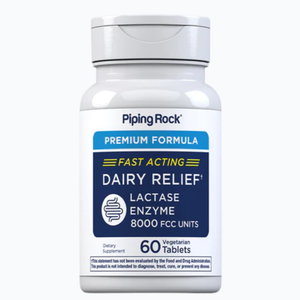
Piping Rock Ultra Lactase Enzyme for Dairy Digestion delivers 8000 FCC lactase units in each tablet, in a bottle of 60 fast-acting vegetarian tablets. It is made for people who love milk, yogurt, cheese and creamy desserts but pay for it afterwards with bloating, gas, cramping, loose stools or a heavy stomach that ruins the rest of the day. Rather than just masking those symptoms, it addresses their direct cause: not enough lactase in the small intestine. Without this enzyme, milk sugar (lactose) passes through undigested and ends up fermenting in the colon. Taken with your first bite of dairy, one tablet supplies the enzyme your body is short on, right when it is needed, so lactose is broken down where it should be before it turns into a problem.
What Is Lactase Enzyme?
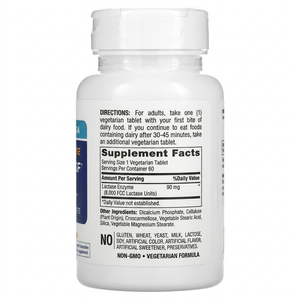
Lactase is a digestive enzyme with a single job: breaking down lactose, the natural sugar found in milk and dairy foods. Lactose is a double sugar made of glucose and galactose bound together, and the body cannot absorb it in that form. Lactase splits the bond, freeing the two simple sugars so they can be absorbed through the intestinal wall. Your body normally makes lactase in the brush border, the fine layer covering the villi of the small intestine. Each tablet of this product contains 90 mg of lactase enzyme, providing 8000 FCC units. FCC units are a standardized measure of enzyme activity, meaning how much lactose the enzyme can actually break down, not just how much it weighs. That makes them the number that matters most when comparing lactase products.
Benefits of Lactase Enzyme
- Less bloating and gas: When lactose is digested in the small intestine, nothing is left for colon bacteria to ferment, and that fermentation is where post-dairy gas and bloating come from.
- Fewer cramps and loose stools: Undigested lactose pulls water into the bowel. Breaking it down in time eases that effect along with the cramping and urgency that follow.
- Enjoy dairy again: Lets lactose-sensitive people have milk, cheese and desserts without bracing for the hours afterwards.
- Keep dairy's nutrients: Many people cut out dairy entirely and lose an easy source of calcium, protein and beneficial fats. Lactase helps keep these foods on the menu.
- A calmer gut environment: Lactose repeatedly reaching the colon feeds excess fermentation that can unbalance the microbiome and keep the gut irritated. Lightening that load helps the gut settle.
- Comfort and energy after meals: Digestive discomfort drains focus and mood. When a meal goes down smoothly, the rest of the day feels lighter.
- Flexibility when eating out: Handy at gatherings and restaurants, where you rarely know how much milk, cream or cheese is in a dish.
How Lactase Enzyme Works in the Body
Most babies are born producing plenty of lactase to digest breast milk. In a large share of adults, though, production gradually declines after weaning, a pattern that is especially common in the Middle East. This is primary lactase deficiency, and its root is a normal genetic pattern. The second type is the one many people overlook: secondary deficiency. Lactase is made at the very tips of the intestinal villi, which are the first part to suffer when the gut lining is damaged. That is why dairy intolerance often appears or worsens after a stomach bug, after a course of antibiotics that disrupted the microbiome, alongside gluten sensitivity, or with chronic gut inflammation or small intestinal bacterial overgrowth.
What happens when the enzyme is missing? Lactose passes intact through the small intestine, drawing water with it, and reaches the colon. There, bacteria feed on it and produce gas and acids, causing the familiar symptoms: bloating, gurgling, cramps, diarrhea and sometimes nausea and heaviness. The tablet tackles this at the source by placing the enzyme in your digestive tract together with the food, so lactose is split into glucose and galactose and absorbed before it ever gets to the colon.
Because secondary deficiency is tied to gut health, results are best when the foundation is addressed too. Too much sugar and refined carbohydrate feeds fermenting bacteria, spikes blood sugar and insulin, and fuels inflammation in the gut lining. Chronic stress and high cortisol weaken digestion and divert blood flow away from the gut, because a body in fight-or-flight mode does not digest well. Poor sleep slows repair of the intestinal lining. Cutting back on sugar, eating calmly, sleeping well and dealing with gut inflammation all help the villi recover their capacity over time.
A few factors make the enzyme work better. The most important is timing: lactase works when it meets lactose, so take it with the first bite, not after symptoms start. Having dairy as part of a meal with fat and protein slows stomach emptying and gives the enzyme more time to act, unlike drinking a large glass of milk alone on an empty stomach. Favoring fermented dairy such as yogurt, kefir and aged cheeses also helps, since bacteria have already used up part of the lactose. What reduces the benefit: taking the tablet long before or long after eating, or dissolving it in a hot drink, as high heat destroys enzymes.
What Makes This Formula Stand Out
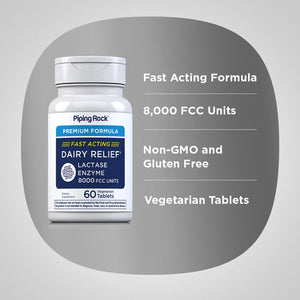
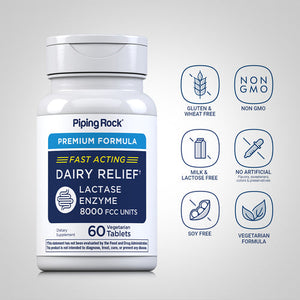
Piping Rock offers a Fast Acting Formula with 8,000 FCC Units in each tablet, a practical strength for a dairy-containing meal that can be topped up with a second tablet when needed. Each tablet carries 90 mg of lactase enzyme with its activity stated in standardized FCC units, giving a clear picture of its real lactose-digesting capacity. These are Vegetarian Tablets with a short list of supporting ingredients: dicalcium phosphate, plant-origin cellulose, croscarmellose to help the tablet break apart quickly, vegetable stearic acid, silica and vegetable magnesium stearate. The formula is Milk & Lactose Free, Gluten & Wheat Free, yeast free and Soy Free, with No Artificial Flavors, sweeteners, colors & preservatives, and it is Non-GMO. That matters for anyone with a sensitive gut who wants to avoid extra irritants.
Who Is This Product For?
- People with lactose intolerance who get bloating, gas or loose stools after milk and dairy foods.
- Anyone whose dairy tolerance has dropped with age or after a stomach bug or a course of antibiotics.
- Those who don't want to give up dairy and its calcium and protein.
- People who enjoy desserts, pastries and dishes made with milk, cream or cheese, especially at gatherings and when eating out.
- Anyone working on gut health who wants to reduce the fermentation load while the gut repairs.
- Vegetarians who eat dairy and want an enzyme in a vegetarian tablet.
How to Use
Per the label, adults take one vegetarian tablet with the first bite of dairy food. If you keep eating dairy-containing foods after 30 to 45 minutes, take an additional tablet. Use it only as needed, with meals that contain milk or dairy, so there is no fixed daily schedule. Swallow the tablet with water or with your first bite, and don't dissolve it in a hot drink. For best results, have dairy as part of a balanced meal with some fat and protein rather than on its own on an empty stomach. For long or very dairy-heavy meals, such as cream desserts or cheese-loaded dishes, use the additional tablet as the label directs.
Product Details
- Active ingredient: Lactase Enzyme, 90 mg per tablet.
- Activity: 8000 FCC lactase units per tablet.
- Form: Fast-acting vegetarian tablet.
- Count: 60 tablets.
- Other ingredients: Dicalcium Phosphate, Cellulose (Plant Origin), Croscarmellose, Vegetable Stearic Acid, Silica, Vegetable Magnesium Stearate.
- Free of: Gluten, wheat, yeast, milk, lactose, soy, artificial colors, artificial flavors, artificial sweeteners and preservatives. Non-GMO, Vegetarian Formula.
- Brand: Piping Rock.
Frequently Asked Questions
What is the difference between lactose intolerance and a milk allergy?
Lactose intolerance is a digestive issue caused by too little lactase, so milk sugar isn't digested properly. That is what this product addresses. A milk allergy is an immune reaction to milk proteins such as casein, and lactase does not help with it. Skin reactions, breathing trouble or swelling after dairy call for a medical assessment, not a digestive enzyme.
When exactly should I take a lactase tablet?
With your first bite of dairy-containing food, because the enzyme needs to be present when lactose arrives in your digestive tract. Taking it once bloating has started is too late, since the lactose has already reached the colon. If the meal goes on for more than 30 to 45 minutes, take a second tablet.
Can I get back to tolerating dairy normally?
If the deficiency is secondary, meaning it comes from gut lining damage after an infection, antibiotics or inflammation, tolerance can improve as the gut heals and you cut back on sugar and irritants, sleep better and manage stress. The genetic, age-related type usually stays, and lactase becomes a practical companion for dairy meals.
Why does milk bother me more than yogurt or aged cheese?
The bacteria in fermented dairy consume part of the lactose during fermentation, so these foods contain much less than fresh milk. Many people tolerate them more easily, and the enzyme matters most with milk, cream and milk-based desserts.
Caution
Consult your doctor if pregnant, nursing, diabetic or taking long-term medication.