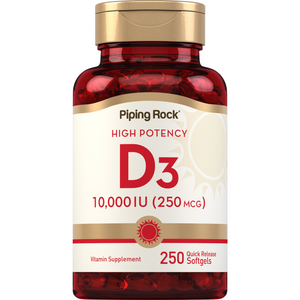
Piping Rock Vitamin D3 delivers 10,000 IU (250 mcg) of cholecalciferol in each quick release softgel, with 250 softgels per bottle. It is a high-potency formula for people with low vitamin D levels, and for anyone who spends most of the day indoors, at a desk, in the car or at home, and gets little real sun exposure. It suits people dealing with persistent fatigue that sleep does not fix, lower back and bone aches, weak or cramping muscles, frequent colds, or low mood. Rather than masking those symptoms, it replaces a hormone-like nutrient the body depends on to absorb calcium, regulate immunity, calm inflammation and keep insulin sensitivity in check. This deficiency is common even in sunny countries, because modern indoor life keeps sunlight off the skin.
What Is Vitamin D3?
Vitamin D3 (cholecalciferol) is the natural form of vitamin D that human skin produces when it is exposed to UVB sunlight. A cholesterol-derived compound in the skin, 7-dehydrocholesterol, is converted into D3. It is a fat-soluble vitamin that behaves more like a pre-hormone than a typical vitamin: once activated, it enters cells and influences hundreds of genes. D3 differs from D2 (ergocalciferol), which comes from plant and fungal sources, and comparative research shows D3 is more effective at raising and maintaining blood vitamin D levels. Food sources are limited, mainly fatty fish, egg yolks and cod liver oil, so diet alone rarely provides enough.
Vitamin D3 Benefits
- Calcium absorption and bone health: Without enough vitamin D, the body absorbs only a small fraction of dietary calcium and pulls calcium from bone to make up the shortfall. This explains the bone and lower back aches linked to deficiency.
- Muscle strength and balance: Muscle fibers carry vitamin D receptors, and low levels are tied to weakness, cramping and difficulty getting up from a seated position, especially in older adults.
- Immune regulation, not just immune boosting: Vitamin D activates the body's first-line defenses against bacteria and viruses. It also supports regulatory T cells, which keep the immune system from attacking the body's own tissues.
- Calming chronic inflammation: Vitamin D dials down inflammatory signaling inside cells. That is why low levels are associated with general aches, stiffness and flare-ups of skin conditions like psoriasis and eczema.
- Insulin sensitivity: The insulin-producing cells of the pancreas have vitamin D receptors, and low vitamin D is associated with insulin resistance and blood sugar swings.
- Mood and energy: Vitamin D helps regulate serotonin production in the brain, and deficiency is linked to seasonal low mood, sluggishness and poor motivation.
- Sleep quality: Vitamin D receptors sit in brain regions that regulate sleep, and low levels are associated with insomnia and broken, unrefreshing sleep.
- Gut lining support: Vitamin D helps maintain the tight junctions between intestinal cells, the barrier that keeps waste and toxins out of the bloodstream.
How Vitamin D3 Works in the Body
Vitamin D3 goes through two activation steps before it can work. The liver converts it to 25-hydroxyvitamin D, the storage form measured in blood tests. The kidneys and many other tissues then convert it into the active form, calcitriol, which binds to the vitamin D receptor inside the cell nucleus and switches genes on or off. That makes liver and kidney health part of the equation. Both activation enzymes need magnesium as a cofactor, so someone low in magnesium can take vitamin D and still not get its full benefit. When vitamin D runs low, parathyroid hormone rises and draws calcium out of bone, and the skeleton quietly pays the price.
The root causes of deficiency go beyond lack of sun. Because vitamin D is fat-soluble, it needs adequate bile from the liver and gallbladder to be absorbed. Absorption therefore drops with a sluggish gallbladder, gallbladder removal or poor fat digestion. Vitamin D is also stored in fat tissue, so people carrying extra weight typically need more. Skin production declines with age, darker skin and covering clothing. Chronic stress and elevated cortisol also drain vitamin D status, as does a diet high in sugar and refined carbs that drives inflammation and insulin resistance. Common medications deplete it too, including corticosteroids, certain anti-seizure drugs and fat-blocking medications.
What Makes This Formula Stand Out
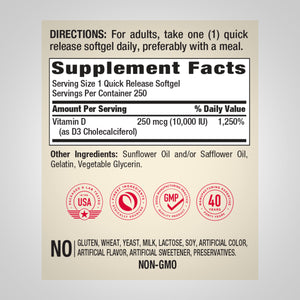
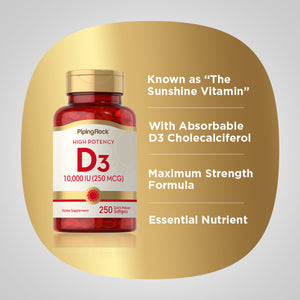
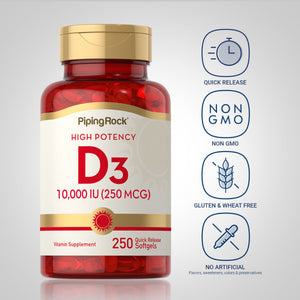
Piping Rock uses the preferred D3 (cholecalciferol) form at a high potency of 10,000 IU (250 mcg) per softgel. This dose is meant for correcting low levels rather than simply maintaining normal ones. The vitamin is dissolved in sunflower and/or safflower oil inside a quick release softgel, and this oil base suits a fat-soluble nutrient and makes it easier to absorb. The formula keeps things simple: it is free of gluten, wheat, yeast, milk, lactose and soy, free of artificial colors, flavors, sweeteners and preservatives, and made with non-GMO ingredients. It is packaged and lab tested in the USA. With 250 softgels at one per day, a single bottle lasts a long time. Note that the softgel shell contains gelatin, so this product is not vegetarian.
Who Is This Product For?
- People whose blood work shows low vitamin D and who need a high dose to bring it up.
- Those who spend most of their time indoors, wear covering clothing, or have darker skin.
- Anyone dealing with chronic fatigue, bone and muscle aches, or frequent infections alongside low vitamin D.
- People with extra body weight or insulin resistance, who usually need more vitamin D.
- Those with poor fat digestion or gallbladder issues that limit absorption of fat-soluble vitamins.
- Older adults, whose skin makes less vitamin D with age.
How to Use
Per the label, adults take one quick release softgel daily, preferably with a meal. A meal containing healthy fats works best, such as eggs, avocado, olive oil or fish, because fat triggers the bile release vitamin D needs for absorption. Many people prefer taking it with breakfast or lunch rather than late at night. To get more out of it, pair it with vitamin K2, which directs calcium into bone rather than arteries, and with enough magnesium to activate vitamin D. Because 10,000 IU is a high dose, it is wise to test blood 25-hydroxyvitamin D before starting, recheck it over time, and set the length of use with a healthcare professional.
Product Details
- Active ingredient: Vitamin D (as D3 Cholecalciferol), 250 mcg (10,000 IU) per softgel, 1,250% DV.
- Form: Quick Release Softgel.
- Count: 250 softgels.
- Other ingredients: Sunflower Oil and/or Safflower Oil, Gelatin, Vegetable Glycerin.
- Free of: Gluten, Wheat, Yeast, Milk, Lactose, Soy, Artificial Color, Artificial Flavor, Artificial Sweetener, Preservatives; Non-GMO.
- Brand: Piping Rock, Packaged & Lab Tested in the USA.
Frequently Asked Questions
Is 10,000 IU a day right for everyone?
This is a high-potency dose designed for people with clearly low vitamin D or higher needs, not a one-size-fits-all amount. The most reliable approach is to test your blood level before starting and keep monitoring it. Take vitamin K2 and magnesium alongside it, since they guide calcium where it belongs and help activate the vitamin.
Why take vitamin K2 with vitamin D3?
Vitamin D increases calcium absorption from the gut. Vitamin K2 activates the proteins that lock that calcium into bones and teeth and keep it out of arteries and soft tissue. The two work as a team, especially at higher vitamin D doses.
Why won't my vitamin D level go up even though I take it?
The most common reasons are taking it on an empty stomach or without fat, low bile output from liver or gallbladder issues, or a magnesium shortage that blocks activation. Extra body fat that stores the vitamin and medications that deplete it can also play a role. Addressing these factors often improves the response.
Is this product suitable for vegetarians?
No. The softgel shell is made from gelatin. The active ingredient itself is vitamin D3 dissolved in sunflower and/or safflower oil.
Caution
Consult a doctor if pregnant, nursing, or taking long-term medication.
Are your products genuine?
Yes. Everything is imported from the United States, the United Kingdom and Turkey, and the Best Before date is printed on each product page.
How long does delivery take?
One to two working days, to every governorate in Jordan.
What does delivery cost?
Free on orders of 29 JOD or more; orders under 29 JOD have a delivery fee of only 2 JOD.
How can I pay?
Pay on delivery in cash or via CliQ. PayPal is available on request — message us and we will send you a payment link.
Can I return a product?
Yes. Our policy is deliberately flexible: if the product is not right for you, for any reason, you get a full refund including the delivery fee. Details in our Refund Policy.
How do I reach you?
WhatsApp +962 7 8162 0564, email qtrat.al97ah@qtrat.net, or through Facebook and Instagram.