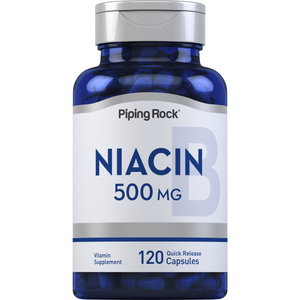
Piping Rock Vitamin B3 Niacin provides 500 mg of niacin per capsule in a bottle of 120 Quick Release Capsules, enough for 120 days at one capsule a day. The niacin here is in the form of nicotinic acid, the classic active form known for producing the niacin "flush", not the no-flush niacinamide form. It suits adults dealing with ongoing fatigue and low energy despite eating well, people who want to support healthy cholesterol, triglycerides and circulation, those whose diet leans on sugar and refined starches or who drink alcohol, and anyone struggling with dry, irritated skin or sluggish digestion. At its root, the problem is not a lack of energy but a lack of the tool that turns food into energy: niacin is the raw material for NAD, the molecule every cell needs to burn glucose and fat. When niacin runs low, those cellular engines slow down, and it shows up as tiredness, brain fog, dry skin and poor digestion.
What Is Vitamin B3 Niacin?
Niacin is vitamin B3, a water-soluble member of the B-complex family, which means the body stores little of it and needs a steady supply. It comes in two main forms: nicotinic acid, used in this product, and niacinamide. Both are converted in the body into the coenzymes NAD and NADP, but only nicotinic acid acts directly on blood vessels and on blood lipid metabolism, which is why it causes a temporary skin flush. Dietary sources include meat, liver, poultry, fish and peanuts, and the body can also make some niacin from the amino acid tryptophan, although this conversion is slow and depends on vitamin B6, vitamin B2 and iron. Niacin was first understood through pellagra, the disease of severe deficiency, marked by dermatitis, diarrhea and mental disturbance.
Benefits of Vitamin B3 Niacin
- Cellular energy production: Niacin builds NAD, which helps break down carbohydrates, fats and protein into usable energy, easing fatigue that comes from a sluggish metabolism.
- Healthy blood lipids: Nicotinic acid is well known for supporting healthy cholesterol and triglyceride levels by reducing the flow of fatty acids from fat stores to the liver.
- Peripheral circulation: It widens small blood vessels in the skin, felt as warmth and temporary redness as blood moves toward the extremities.
- Skin and barrier health: Skin is one of the first tissues to suffer when niacin is low, since it relies on it to renew cells and maintain its protective lipid layer.
- Nervous system and focus: The brain is one of the most energy-hungry organs and depends on NAD for fuel and neurotransmitter production, supporting mental clarity and a steady mood.
- Digestive health: The gut lining renews itself constantly and needs niacin to do so, which is why low niacin is linked to digestive upset.
- Liver fat processing: NAD drives key liver pathways that process fats and clear metabolic byproducts.
- Cell protection and repair: Cells use NAD in DNA repair enzymes and antioxidant defenses, processes that matter more with age.
How Vitamin B3 Niacin Works in the Body
Food does not become energy directly. It passes through a long chain of reactions inside the mitochondria, the cell's power plants. NAD acts as an electron carrier in this chain, picking up electrons from glucose and fat and delivering them to the final step where ATP, the body's energy currency, is made. When niacin is low, NAD falls and the whole production line slows. You feel tired even after a good meal, and you may crave sugar because the body is looking for quick fuel it cannot burn efficiently anyway.
Nicotinic acid's effect on lipids works through a receptor on fat cells called GPR109A. When niacin binds to it, fewer fatty acids are released into the bloodstream, so the liver receives less raw material to build triglyceride-rich lipoproteins, which in turn supports a healthier cholesterol balance. The same receptor sits on skin cells, where it triggers prostaglandins that dilate capillaries. That is the flush: temporary redness, warmth and tingling in the face, neck and chest. It is an expected effect of this form of niacin, not an allergy.
The bigger question is why niacin runs low in the first place. The causes are usually lifestyle-driven:
- Sugar and refined starches: Burning sugar uses up B vitamins quickly, and white flour and polished rice have lost much of the B vitamins found in whole grains.
- Insulin resistance: Chronically high blood sugar and insulin strain the mitochondria and raise their demand for NAD, feeding a cycle of fatigue and sugar cravings.
- Alcohol: The liver burns through large amounts of NAD to break down alcohol, and alcohol also impairs B-vitamin absorption.
- Poor digestion and absorption: Gut inflammation or low stomach acid reduces niacin absorption and the breakdown of tryptophan-carrying protein.
- Missing cofactors: Converting tryptophan to niacin requires vitamin B6, vitamin B2 and iron, so a shortfall in any of them limits what the body can make.
- Stress, cortisol and certain medications: Chronic stress increases B-vitamin use, and some drugs such as the tuberculosis medication isoniazid interfere with niacin metabolism.
To get more from it, take niacin with a balanced meal containing protein and healthy fats, which slows absorption and softens both the flush and any stomach discomfort. Pairing it with a good source of the other B vitamins helps keep them in balance, and cutting back on sugar and alcohol stops the drain. Keep in mind that high doses of nicotinic acid may raise blood sugar and uric acid in some people and are processed by the liver, so anyone with significant insulin resistance or liver concerns should use it under medical supervision.
What Makes This Formula Stand Out
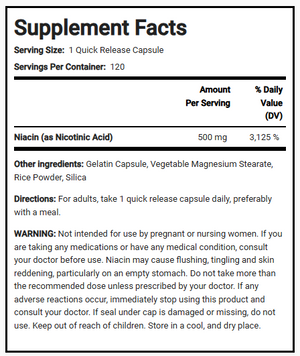
Each capsule delivers 500 mg of niacin as nicotinic acid, the form that carries niacin's full effect on blood vessels and lipid metabolism, unlike niacinamide, which supports energy and skin but does not act on lipids the same way. These are Quick Release Capsules, releasing niacin all at once rather than through an extended-release system. That makes the flush more noticeable, but it also means niacin passes through the liver more quickly. The routine is simple, one capsule a day, and 120 capsules last a long time. The formula has a single active ingredient and a short list of other ingredients: Gelatin Capsule, Vegetable Magnesium Stearate, Rice Powder and Silica. Note that the capsule is gelatin, so this product is not suitable for vegetarians.
Who Is This Product For?
- Adults with persistent fatigue and low energy linked to a diet high in sugar and refined starches.
- People looking to support healthy cholesterol and triglyceride levels alongside a healthy diet.
- Those with cold hands and feet who want to support peripheral circulation.
- Regular alcohol drinkers or people under chronic stress that depletes B vitamins.
- Anyone dealing with dry, irritated skin and digestive issues tied to poor nutrient status.
- Adults who want the classic form of niacin and are comfortable with a temporary flush.
How to Use
For adults, take 1 quick release capsule daily, preferably with a meal.
The best time is with a main meal that includes protein and healthy fats, since taking it on an empty stomach increases flushing, tingling and skin reddening. Many people prefer taking it with dinner so any flush passes in the evening without disrupting the day. Avoid taking it alongside hot drinks or alcohol, or right before a hot shower or workout, as these all widen blood vessels and intensify the flush. With consistent use, the flush tends to ease for many people. Swallow with a full glass of water and do not exceed the dose on the label.
Product Details
- Active ingredient: Niacin (as Nicotinic Acid) 500 mg per capsule
- Daily Value: 3,125% per capsule, as printed on the label
- Form: Quick Release Capsules
- Count: 120 capsules
- Daily dose: 1 capsule
- Other ingredients: Gelatin Capsule, Vegetable Magnesium Stearate, Rice Powder, Silica
- Note: Gelatin capsule, not vegetarian
- Brand: Piping Rock
Frequently Asked Questions
What is the niacin flush, and is it dangerous?
The flush is temporary redness, warmth and tingling, usually in the face, neck and chest, after taking nicotinic acid. It happens because prostaglandins dilate the capillaries in the skin. It is an expected effect of this form, not an allergy, and it eases when the capsule is taken with food and away from hot drinks and alcohol. If it comes with severe dizziness, palpitations or shortness of breath, stop the product and see a doctor.
How is this different from no-flush niacin?
This product is nicotinic acid, the form that dilates blood vessels and affects blood lipid metabolism, which is why it flushes. Products sold as "no-flush" are usually niacinamide or inositol hexanicotinate, which support energy and skin but lack nicotinic acid's effect on lipids. If your goal is cholesterol balance and circulation, this is the form you want. If you only want skin and energy support without the flush, niacinamide is the better fit.
Can I take niacin with cholesterol, diabetes or blood pressure medication?
Check with your doctor first. Nicotinic acid dilates blood vessels and may add to the effect of blood pressure medication, it can raise blood sugar in some people and affect diabetes control, and combining it with cholesterol medication calls for monitoring of liver and muscle health.
Is 500 mg of niacin safe for the liver?
Niacin is processed in the liver, and healthy adults generally tolerate a quick release dose well when they stick to one capsule a day with food. Anyone with liver disease, heavy alcohol use or medications that burden the liver should consult a doctor, and periodic liver function tests are sensible for long-term use.
Caution
Not intended for pregnant or nursing women; consult a doctor if you have liver disease, diabetes or gout, or take long-term medication.