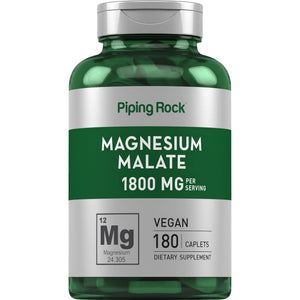
Piping Rock Magnesium Malate delivers 120 mg of elemental magnesium per caplet, sourced from 600 mg of Magnesium Malate, in a bottle of 180 vegan caplets. At the label's recommended 3 caplets daily, you get 360 mg of elemental magnesium from 1,800 mg of Magnesium Malate, and the bottle lasts 60 days. This form pairs two partners from the same energy pathway: magnesium, which every cell needs to activate its energy molecule ATP, and malic acid, a link in the energy-producing cycle inside the mitochondria. It is a natural fit for people dealing with fatigue that sleep doesn't fix, heavy or sore muscles, night-time leg cramps, a wired nervous system that won't settle, and frequent sugar cravings. These everyday signs often trace back to low magnesium inside the cells, a shortfall driven by diets high in sugar and refined carbs, insulin resistance, chronic stress and common medications. Stimulants and painkillers don't address that root; replacing the missing mineral does.
What Is Magnesium Malate?
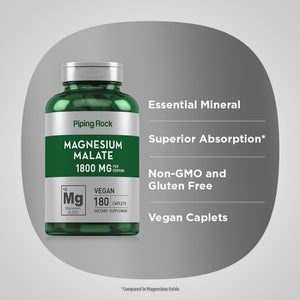
Magnesium Malate is magnesium bound to malic acid, an organic acid found naturally in apples and many fruits, and one your body also makes while turning food into energy. Because magnesium is attached to an organic acid, it behaves differently from inorganic forms such as magnesium oxide, which is why the label notes "Superior Absorption" compared to Magnesium Oxide. Two numbers are worth separating: 600 mg per caplet is the weight of the whole Magnesium Malate compound, while 120 mg is the elemental magnesium your body actually receives. The 1800 MG on the front refers to the compound in 3 caplets, which provides 360 mg of elemental magnesium, or 86% of the Daily Value. Food sources of magnesium include dark leafy greens, nuts, seeds, avocado and cacao.
Benefits of Magnesium Malate
- Supports cellular energy: Magnesium is required for ATP to work, and malic acid feeds the mitochondrial energy cycle, so the two support a tired cell from the inside.
- Eases muscle fatigue and heaviness: This form is especially suited to muscles that feel tired, stiff and slow to recover, because it supports the energy pathway muscles rely on.
- Helps muscles relax and reduces cramping: Magnesium lets a muscle release after it contracts, and low levels are linked to night-time leg cramps and neck and shoulder tension.
- Calms the nervous system: Magnesium dampens nerve over-excitation, supporting a sense of calm and better sleep quality.
- Supports healthy blood sugar balance: Magnesium helps insulin move glucose into cells, and a shortfall feeds the cycle of insulin resistance and sugar cravings.
- Supports focus and mental clarity: The brain is a heavy energy user, and supporting energy production while calming the nerves helps with attention and brain fog.
- Supports bones and heart: Magnesium helps direct calcium into bone and supports a steady heart rhythm alongside potassium.
- Gentle on digestion: Magnesium bound to an organic acid tends to be easier on the gut than oxide, especially when caplets are spread through the day.
How Magnesium Malate Works in the Body
ATP, the cell's energy currency, is only active when it is bound to magnesium. When magnesium runs low, your cells have fuel but can't use it efficiently, which shows up as general fatigue, low stamina and slow recovery. Malic acid adds to this: it is an intermediate of the Krebs Cycle in the mitochondria, where the body burns food to make energy. Delivered together, the energy pathway receives both its key mineral cofactor and one of its own building blocks, which is why this form is so closely associated with fatigue and tired muscles.
In muscles and nerves, magnesium acts as a natural counterbalance to calcium. Calcium triggers contraction and nerve firing; magnesium allows relaxation and calm afterward. When magnesium is low, calcium dominates, leading to cramps, muscle tightness, tension headaches, restless sleep and a constant on-edge feeling. Most of the body's magnesium sits inside cells, bones and muscles rather than in the blood, so a blood test can look normal while the cells are running short.
Magnesium gets drained from several directions: sugar and refined carbs use it up processing glucose and increase its loss in urine, insulin resistance weakens the cells' ability to hold onto it, chronic stress raises cortisol and accelerates loss, and diuretics, acid-reducing medications, alcohol, excess caffeine and heavy sweating all lower levels. The result is a loop: low magnesium raises stress, disrupts sleep and drives sugar cravings, which drain even more magnesium.
To get more from it, take it with food and pay attention to its partner nutrients: vitamin D, which needs magnesium to be activated; vitamin K2, which works with it to direct calcium into bone; potassium, which shares its role in nerve and heart function; and vitamin B6, which helps move magnesium into cells. Adequate stomach acid and a healthy gut also matter, since chronic bloating and poor digestion can limit how well any mineral is absorbed.
What Makes This Formula Stand Out
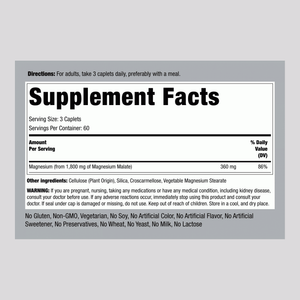
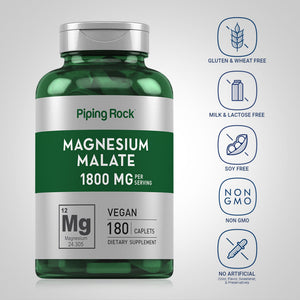
Piping Rock offers magnesium as Magnesium Malate, an organic-acid-bound form the label describes as offering superior absorption compared to Magnesium Oxide. Each caplet provides 120 mg of elemental magnesium from 600 mg of Magnesium Malate, so 3 caplets deliver 360 mg of elemental magnesium (86% DV) from 1,800 mg of the compound. Splitting the daily amount across three caplets is a practical advantage: you can spread them over meals for better absorption and less of the digestive discomfort that can come with one large dose. The caplets are vegan, Non-GMO, and free of gluten, wheat, soy, milk, lactose and yeast, with no artificial color, flavor, sweetener or preservatives. Other ingredients are Cellulose (Plant Origin), Silica, Croscarmellose and Vegetable Magnesium Stearate.
Who Is This Product For?
- Anyone with ongoing fatigue and muscle tiredness that rest doesn't resolve.
- People whose muscles feel heavy, stiff or sore, or who recover slowly after exertion.
- Those with frequent night-time leg cramps or neck and shoulder tension.
- People under constant stress who struggle to unwind or sleep deeply.
- Anyone working on blood sugar balance or battling sugar cravings.
- Those who found magnesium oxide hard on the stomach, plus athletes and heavy sweaters.
How to Use
Per the label, adults take 3 caplets daily, preferably with a meal. Spreading them across the day can improve comfort and absorption: one with breakfast and one with lunch to support daytime energy and focus, and one with dinner to support relaxation and sleep. If you're new to magnesium, starting with one caplet and building up to the recommended amount can be gentler. Store in a cool, dry place out of reach of children.
Product Details
- Magnesium (elemental): 120 mg per caplet; 360 mg per 3 caplets (86% DV).
- Source - Magnesium Malate: 600 mg per caplet; 1,800 mg per 3 caplets.
- Form: Vegan Caplets.
- Count: 180 caplets, a 60-day supply at 3 caplets daily.
- Other ingredients: Cellulose (Plant Origin), Silica, Croscarmellose, Vegetable Magnesium Stearate.
- Free of: Gluten, wheat, soy, milk, lactose, yeast, preservatives, and artificial color, flavor and sweetener; Non-GMO.
- Brand: Piping Rock.
Frequently Asked Questions
Does this contain 1,800 mg or 120 mg of magnesium?
The 1800 MG on the front is the weight of the Magnesium Malate compound in 3 caplets, which provides 360 mg of elemental magnesium. Each caplet contains 600 mg of the compound, providing 120 mg of elemental magnesium, the figure that reflects the magnesium your body actually gets.
How is magnesium malate different from glycinate or citrate?
Malate is bound to malic acid, part of the energy cycle, so it's often chosen for fatigue and tired muscles. Glycinate is popular for relaxation and sleep, while citrate is more associated with moving the bowels. The best choice depends on your main goal.
Can I take magnesium malate in the evening, or is it energizing?
Magnesium itself calms nerves and muscles, and malic acid supports the cell's natural energy production rather than acting like a stimulant. You can take it any time with food; many people spread the caplets through the day and take one with dinner.
What reduces how much magnesium I absorb and keep?
High sugar and refined carb intake, chronic stress, poor sleep, alcohol, excess coffee, and medications such as diuretics and acid reducers all increase magnesium loss or reduce absorption. Cutting back on these and taking the caplets with food helps you get more from each dose.
Caution
Consult your doctor if pregnant, nursing, have kidney disease, or take ongoing medication.