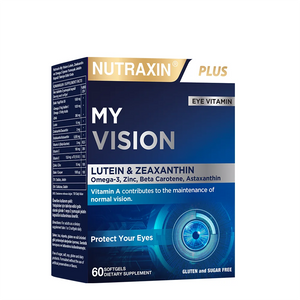
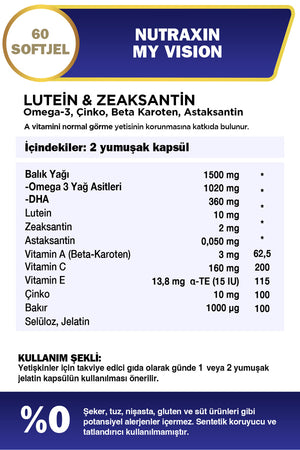
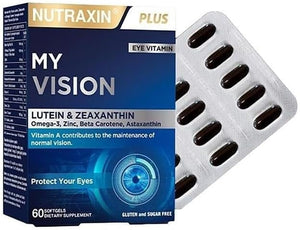
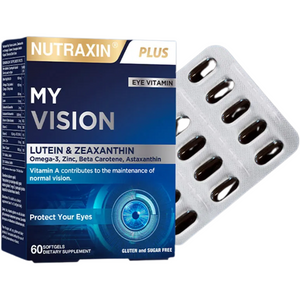
Nutraxin My Vision Eye Support Formula with Fish Oil & Lutein is a comprehensive eye supplement in softgels, with 60 softgels per bottle. Every 2 softgels provide 1500 mg of fish oil, including 1020 mg of omega-3 fatty acids and 360 mg of DHA. The formula adds 10 mg of lutein, 2 mg of zeaxanthin and astaxanthin, along with beta-carotene as a source of vitamin A, vitamin C, vitamin E, zinc and copper. It suits people who spend long hours on screens, deal with dry, tired eyes or weaker night vision, or want to protect the retina as they age. Rather than masking symptoms the way a lubricating drop does, it targets three deeper reasons eyes struggle: too little protective pigment in the macula, too little structural fat in retinal cells, and constant oxidative and inflammatory stress on one of the most oxygen-hungry, light-exposed tissues in the body.
What Is My Vision Eye Support Formula?
The formula is built on two complementary groups of nutrients.
The first group is fat-soluble:
- Fish oil: A source of long-chain omega-3 fatty acids, above all docosahexaenoic acid (DHA). DHA is the most concentrated fatty acid in the membranes of the retina's light-sensing cells.
- Lutein and zeaxanthin: Yellow carotenoid pigments from the xanthophyll family. The body cannot make them, so they must come from food. Once absorbed, they are selectively concentrated in the macula, the center of sharp, detailed vision.
- Astaxanthin: A red marine carotenoid from microalgae. It is what gives salmon and shellfish their pink color.
- Beta-carotene: A plant pigment that the body converts into vitamin A as needed.
The second group is antioxidants and minerals that protect these fats and run the enzymes that use them: vitamin C, vitamin E, zinc and copper.
Benefits of My Vision Eye Support Formula
- Normal vision: Vitamin A, made from beta-carotene, contributes to the maintenance of normal vision. It is the building block of rhodopsin, the pigment that captures light in the retina.
- Low-light vision: Adapting to darkness depends on constantly regenerating rhodopsin. That process needs vitamin A and zinc, which powers the enzymes involved.
- Blue light filtering: Lutein and zeaxanthin collect in the macula and act like built-in sunglasses. They absorb high-energy blue light before it reaches sensitive cells.
- Dry eye support: Omega-3s support the oily layer of the tear film, which is produced by glands in the eyelids. This layer stops tears from evaporating too fast, the cause of burning and gritty eyes.
- Retinal cell structure: DHA is a structural component of photoreceptor membranes. It gives them the flexibility they need to transmit visual signals efficiently.
- Antioxidant protection: Vitamin C, vitamin E, zinc and copper contribute to the protection of cells from oxidative stress. Astaxanthin adds dedicated protection for cell membranes.
- Less eye fatigue: Protective pigments, structural fats and antioxidants work together to support comfort after long hours of reading and computer work.
- Zinc-copper balance: Copper is paired with zinc so that daily long-term use does not drain the body's copper stores.
How My Vision Works in the Body
Why eyes get tired in the first place
The eye, and the retina in particular, is one of the most energy- and oxygen-demanding tissues in the body. It is also exposed to light for every waking hour, and its cell membranes are rich in DHA, a fat that oxidizes very easily. Dense oxygen, constant light and fragile fats together make the eye a permanent target for free radicals. When protective pigments and antioxidants run low, gradual damage follows. It shows up as fatigue, blurriness, weaker night vision and sensitivity to glare.
The macula and its protective pigments
Lutein and zeaxanthin enter the bloodstream along with dietary fat and travel on lipoproteins to the retina. There, specific binding proteins capture them and concentrate them in the macula, forming what is known as macular pigment. The denser this pigment becomes, the more blue light it can absorb and the more free radicals it can quench right where they form.
DHA and the antioxidant team
DHA is built into the membrane discs inside rod and cone cells, where the chemistry of vision takes place. Because this fat is so fragile, antioxidants guard it, each in its own position:
- Vitamin E: Works inside the fatty membrane itself.
- Vitamin C: Works in the surrounding fluid and recycles vitamin E after it has been used up.
- Astaxanthin: Spans the entire membrane, protecting it from the inside and outside at once.
Zinc and vitamin A
The liver needs zinc to make the protein that carries vitamin A to the eye. This means vitamin A can be stored in the body and still fail to reach the retina when zinc is low, which often shows up as poor night vision.
Root causes that harm the eyes
- High blood sugar and insulin resistance: Among the quietest stressors on the eyes. Excess glucose sticks to proteins, damages the tiny capillaries that feed the retina, and drives up inflammation and oxidation. Glucose also competes with vitamin C for the same cellular transporters, which limits how much vitamin C reaches eye tissue.
- Too many refined vegetable oils: These skew the omega-6 to omega-3 ratio and feed the chronic inflammation that shows up in the eyes as dryness and redness.
That is why managing blood sugar and cutting back on refined carbs are part of eye support, not a side note.
What Makes This Formula Different
This Nutraxin formula brings together nutrients that are usually bought as separate products.
- Concentrated fish oil: 1500 mg per 2 softgels, delivering 1020 mg of omega-3s, including 360 mg of DHA, the omega-3 most important to the retina.
- A 5:1 lutein-to-zeaxanthin ratio: 10 mg of lutein with 2 mg of zeaxanthin, the ratio widely used in eye health formulas.
- Vitamin A from beta-carotene: The body converts it to vitamin A as needed, instead of receiving a fixed preformed dose.
- Balanced zinc and copper: 10 mg of zinc with 1000 mcg of copper, so zinc does not deplete copper.
- A format that helps absorption: The softgel carries the carotenoids in a fatty base of the fish oil itself, which is exactly what these nutrients need to be absorbed.
- A short ingredient list: The only other ingredients are cellulose and gelatin. The formula is free of sugar, salt, soy, gluten, dairy products, starch, artificial preservatives, and artificial flavors and sweeteners.
Who Is This Product For?
- People who spend long hours on computers and phones and feel eye strain by the end of the day.
- Anyone dealing with dry, burning or gritty eyes.
- Those who notice weaker night vision or trouble adjusting to dim light and headlight glare.
- Adults over 40 who want to support the macula and retina as they age.
- People with blood sugar issues or insulin resistance who want to protect the retina's fine capillaries.
- Anyone who rarely eats fatty fish or dark leafy greens.
How to Use
- Dose: For adults as a dietary supplement, take 1 or 2 softgels daily.
- How the amounts are counted: All amounts on the label are per 2 softgels. Taking 1 softgel gives half, for example 5 mg of lutein and 750 mg of fish oil.
- With food: Take with a meal that contains fat, such as eggs, avocado, olive oil or meat. Lutein, zeaxanthin, astaxanthin, beta-carotene and vitamin E are all fat-soluble and absorb poorly on an empty stomach.
- With water: Swallow with plenty of water.
- Timing: Both softgels can be taken together with one meal or split between two meals.
Several factors raise or lower how much you get from the formula:
- Fat digestion: Carotenoid absorption depends on bile. People with a sluggish gallbladder, bloating or heaviness after fatty meals, or no gallbladder may absorb less.
- Antioxidant drains: Smoking, high sugar intake and chronic stress burn through vitamins C and E quickly.
- Sleep: Enough sleep gives the retina the overnight repair window it relies on.
- Diet: Cutting back on refined oils and sugar supports what the softgel does, and no supplement replaces that.
Product Details
- Form: Softgel.
- Count: 60 softgels.
- Fish Oil per 2 softgels: 1500 mg.
- Omega 3 Fatty Acids per 2 softgels: 1020 mg.
- DHA per 2 softgels: 360 mg.
- Lutein per 2 softgels: 10 mg.
- Zeaxanthin per 2 softgels: 2 mg.
- Astaxanthin per 2 softgels: 0.050 mg.
- Vitamin A (Beta-Carotene) per 2 softgels: 3 mg (62.5% DV).
- Vitamin C per 2 softgels: 160 mg (200% DV).
- Vitamin E per 2 softgels: 13.8 mg α-TE, equal to 15 IU (115% DV).
- Zinc per 2 softgels: 10 mg (100% DV).
- Copper per 2 softgels: 1000 mcg (100% DV).
- Other ingredients: Cellulose, Gelatin.
- Free of: Sugar, salt, soy, gluten, dairy products, starch, artificial preservatives, and artificial flavors and sweeteners.
- Brand: Nutraxin.
Frequently Asked Questions
Is 1 softgel a day enough, or should I take 2?
The label allows 1 or 2 softgels daily, but every amount listed is per 2 softgels. One softgel provides 5 mg of lutein and 180 mg of DHA, while two provide 10 mg of lutein and 360 mg of DHA. Two softgels usually suit people with noticeable dryness or strain or heavy screen use. One softgel suits maintenance.
What is the difference between lutein and zeaxanthin, and why are they combined?
Both are yellow pigments that collect in the macula, but they are distributed differently. Zeaxanthin concentrates in the very center, where vision is sharpest, while lutein spreads toward the edges. Together they filter blue light and protect the whole macula, and the 10 mg to 2 mg ratio here reflects that natural distribution.
Does this formula help with dry eyes?
Dry eye is often not a lack of water but a problem with the oily layer of the tear film, which is produced by glands in the eyelids. When that layer is poor, tears evaporate too fast. The omega-3s in fish oil support the quality of this layer and calm inflammation on the eye's surface, addressing dryness at its source instead of offering only temporary relief.
Why should it be taken with food?
Most of the active ingredients are fat-soluble: lutein, zeaxanthin, astaxanthin, beta-carotene, vitamin E and omega-3s. They absorb well only in the presence of dietary fat and bile, which the gallbladder releases in response to a meal. Taking fish oil with food also reduces fishy burps.
Caution
Consult a doctor if pregnant, breastfeeding, or taking blood thinners or long-term medication.
Are your products genuine?
Yes. Everything is imported from the United States, the United Kingdom and Turkey, and the Best Before date is printed on each product page.
How long does delivery take?
One to two working days, to every governorate in Jordan.
What does delivery cost?
Free on orders of 29 JOD or more; orders under 29 JOD have a delivery fee of only 2 JOD.
How can I pay?
Pay on delivery in cash or via CliQ. PayPal is available on request — message us and we will send you a payment link.
Can I return a product?
Yes. Our policy is deliberately flexible: if the product is not right for you, for any reason, you get a full refund including the delivery fee. Details in our Refund Policy.
How do I reach you?
WhatsApp +962 7 8162 0564, email qtrat.al97ah@qtrat.net, or through Facebook and Instagram.