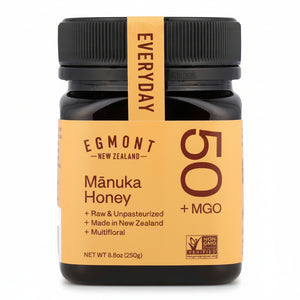
Egmont Honey Manuka Honey Raw & Unpasteurized MGO 50 comes in a 250 g jar. It is a multifloral New Zealand honey from the EVERYDAY range, graded MGO 50+, which guarantees a minimum level of methylglyoxal, the compound that sets Mānuka apart from ordinary honey. It suits anyone moving away from refined white sugar and heat-processed supermarket honey who wants a raw natural sweetener instead, one that keeps its enzymes and plant compounds and supports the throat, immunity and gut health. The real issue is what kind of sugar enters the body every day, not just sweetness itself. Refined sugar delivers empty calories that feed inflammation and drain minerals. Raw honey brings active compounds along with its sweetness. It is still sugar, though, so this jar works best for people who use it in small, deliberate amounts and stay mindful of blood sugar.
What Is Manuka Honey Raw & Unpasteurized MGO 50?
Mānuka honey is made by bees from the nectar of the Mānuka shrub (Leptospermum scoparium), which is native to New Zealand. Mānuka nectar contains dihydroxyacetone (DHA). As the honey matures and ages, DHA gradually converts into methylglyoxal (MGO), the compound behind Mānuka's well-known antibacterial activity. The MGO number tells you how many milligrams of methylglyoxal are in each kilogram of honey, and a higher number means stronger activity. A 50+ grade is the foundational everyday level. "Multifloral" on the label means the honey blends Mānuka nectar with nectar from other New Zealand flowers, which gives it a milder taste and a more accessible price than high-grade monofloral Mānuka. "Raw & Unpasteurized" means the honey has not been heated to pasteurization temperatures, which destroy living enzymes and heat-sensitive compounds.
Benefits of Manuka Honey Raw & Unpasteurized MGO 50
- Soothes the throat and cough: The thick texture coats an irritated throat, and methylglyoxal adds antibacterial activity right where the irritation is.
- Two antibacterial pathways: Raw honey combines Mānuka-specific methylglyoxal with the hydrogen peroxide produced by the living glucose oxidase enzyme in unpasteurized honey.
- Supports a balanced microbiome: Honey contains oligosaccharides that feed beneficial bacteria in the colon, while its antimicrobial activity helps keep unwanted microbes in check.
- Natural antioxidants: Raw multifloral honey carries polyphenols and flavonoids that help neutralize free radicals driven by inflammation and stress.
- A smarter swap for refined sugar: Replacing white sugar with a small amount of raw honey means your sweetener also delivers enzymes and plant compounds, not just empty calories.
- Living enzymes preserved: Skipping pasteurization keeps enzymes such as invertase, diastase and glucose oxidase intact. These are exactly what separate raw honey from heat-treated commercial honey.
- Seasonal immune support: Mānuka is traditionally reached for during colds and sore throats, and it works naturally in warm drinks.
- Verified purity: It is 100% New Zealand honey, Non-GMO Project Verified, with its MGO grade printed on the jar.
How Manuka Honey Works in the Body
Most honeys get their antibacterial action from hydrogen peroxide. The enzyme glucose oxidase produces it when honey is diluted by water or saliva. This pathway is sensitive to heat and light, so pasteurized honey loses much of it. Mānuka has a second pathway that does not depend on that enzyme: methylglyoxal. This small, reactive molecule interacts with bacterial proteins and weakens their ability to attach, multiply and build the protective biofilms they hide behind. When the honey is raw, both pathways work together.
In the gut, some of honey's oligosaccharides escape absorption in the small intestine and reach the colon, where they feed beneficial bacteria. Those bacteria produce short-chain fatty acids that nourish the gut lining and calm inflammation. That is why Mānuka is often linked to easier digestion and less bloating in people with an imbalanced microbiome.
The other side of the story is blood sugar. One tablespoon of this honey contains 15 g of sugars, mostly fructose and glucose, and the body ultimately treats them as sugar. Glucose raises insulin, and fructose is processed by the liver. Too much of either strains the liver and feeds insulin resistance and belly fat, however natural the source. The benefit of Mānuka comes from small, intentional amounts, not from eating more.
A few habits help you get more from it:
- Pair it with protein, fat or fiber: Plain yogurt, nuts or almond butter slow down how fast the sugar enters your bloodstream.
- Let it dissolve slowly for a sore throat: This keeps it in contact with the irritated area for longer.
- Add it to drinks once they cool slightly: Boiling water damages the enzymes.
- Combine it with supportive foods: Fresh lemon adds vitamin C, and ginger or cinnamon add extra immune and digestive support.
Some things work against it. A diet full of sugar and refined starch leaves honey with no advantage. Chronic stress raises cortisol and blood sugar. Repeated antibiotic courses without rebuilding the gut weaken the very microbiome honey supports.
What Makes This Formula Different
The key feature is that this honey is raw and unpasteurized. Most commercial honey is heated and finely filtered so it stays runny and glossy on the shelf. That process strips out enzymes, some of the pollen and heat-sensitive compounds. This honey stays the way the bees made it.
The MGO 50+ grade on the jar gives you a known minimum methylglyoxal level, not just the word "Mānuka" with no number behind it. The only ingredient is 100% New Zealand honey, with no added syrups or flavorings. Because it is multifloral, the taste is gentle enough for daily tea and breakfast. It is also Non-GMO Project Verified.
The 250 g jar holds about 11 tablespoons. That is a practical size for small daily use, so you finish the jar while it is still fresh.
Who Is This Product For?
- Anyone replacing white sugar and pasteurized supermarket honey with a raw natural sweetener in drinks and breakfast.
- People prone to sore throats, coughs and colds when the seasons change.
- Those focused on gut health who want foods that support beneficial bacteria.
- First-time Mānuka buyers who want an everyday grade with a mild taste and a reasonable price.
- Families looking for a traceable New Zealand honey for daily use by adults and children over one year old.
How to Use
The label does not list specific directions. A common approach is one teaspoon to one tablespoon a day. You can take it straight from the spoon and let it melt slowly to soothe the throat. You can also stir it into yogurt, oatmeal or nuts, or add it to tea or warm water once it has cooled slightly from boiling.
The best timing is in the morning or after a meal rather than on its own on an empty stomach, which keeps the blood sugar response gentler. If you have insulin resistance, stick to a teaspoon alongside protein or fat.
Always use a dry spoon. Keep the jar sealed and store it at 18°C (64°F) or below, as the label recommends. It does not need to go in the fridge. Crystallization over time is normal for raw honey and does not mean it has gone bad.
Product Details
- Form: Raw, unpasteurized multifloral honey.
- Net weight: 250 g (8.8 oz), about 11 tablespoons per jar.
- MGO grade: 50+, meaning at least 50 mg of methylglyoxal per kilogram of honey. This grade applies to the honey as a whole, not to each spoonful.
- Nutrition per 1 tablespoon (21 g): 70 calories, 18 g total carbohydrate including 15 g total sugars, 0 g fat, 0 g protein, 0 mg sodium.
- Ingredients: 100% New Zealand Honey.
- Certification: Non-GMO Project Verified.
- Brand and origin: Egmont Honey, made in New Zealand.
Frequently Asked Questions
What does MGO 50 mean on Manuka honey?
The MGO 50+ grade on Egmont Honey Mānuka means each kilogram of honey contains at least 50 mg of methylglyoxal, the compound behind Mānuka's distinctive antibacterial activity. It is the foundational everyday grade. Higher grades such as 250+ or 500+ are more concentrated and are usually chosen for more targeted use.
What is the difference between raw unpasteurized honey and regular honey?
Regular store-bought honey is often heated so it stays liquid and crystallizes more slowly. That heat destroys much of its living enzyme content, including glucose oxidase, and some of its antibacterial activity goes with it. Raw unpasteurized honey keeps those enzymes and plant compounds intact. That is also why it crystallizes over time, which is a sign it is natural, not a flaw.
Is Manuka honey suitable for diabetics or low-carb diets?
Mānuka is a natural honey, but each tablespoon still contains 15 g of sugars and raises blood sugar like any other honey. If you have diabetes or insulin resistance, or you follow keto, use very small amounts with protein or fat. Save it for times you actually need it, such as a sore throat. It is not meant to be a high-volume daily sweetener.
Can children have Manuka honey?
The Egmont Honey label states that it is not suitable for infants under 12 months of age. This applies to all honey, because an infant's gut is not yet mature. Children over one year old can have small amounts, such as a teaspoon in warm water or with breakfast.
Caution
Not for infants under 12 months. People with diabetes or on long-term medication should consult their doctor.
Are your products genuine?
Yes. Everything is imported from the United States, the United Kingdom and Turkey, and the Best Before date is printed on each product page.
How long does delivery take?
One to two working days, to every governorate in Jordan.
What does delivery cost?
Free on orders of 29 JOD or more; orders under 29 JOD have a delivery fee of only 2 JOD.
How can I pay?
Cash on delivery, Visa or Mastercard at the door, or CliQ. PayPal is available on request — message us and we will send you a payment link.
Can I return a product?
Yes. Our policy is deliberately flexible: if the product is not right for you, for any reason, you get a full refund including the delivery fee. Details in our Refund Policy.
How do I reach you?
WhatsApp +962 7 8162 0564, email qtrat.al97ah@qtrat.net, or through Facebook and Instagram.