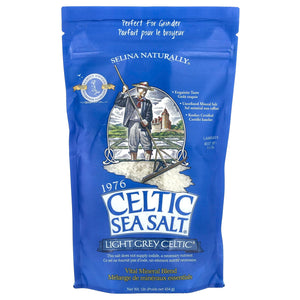
Celtic Sea Salt Light Grey Natural Sea Salt with Vital Mineral Blend is a raw, unrefined sea salt in a 454 g bag. Each 1/4 tsp (1.5 g) provides 480 mg of sodium, and the bag holds about 302 uses at that amount. This is an everyday kitchen salt, not a medicinal supplement. It suits anyone who wants to replace refined white table salt with a salt kept in its natural state, free from anti-caking agents and additives. It is especially relevant if you eat low-carb, practise intermittent fasting, sweat heavily from training or summer heat, or deal with fatigue, light-headedness or muscle cramps. These symptoms often trace back to an electrolyte imbalance rather than a simple lack of energy.
What Is Celtic Grey Sea Salt?
Celtic grey sea salt is made by evaporating seawater. After that, it is not washed with chemicals, bleached or refined. Its main component is sodium chloride. Because the salt stays in its raw state, it also keeps traces of other ocean minerals. The brand names magnesium, calcium and potassium among them, although the label does not list amounts. The light grey colour and natural moisture come from these minerals and from the sea brine held within the crystals. Refined table salt, by contrast, is usually stripped down to almost pure sodium chloride and often has anti-caking agents added. This salt is Kosher Certified and Paleo-friendly, and its only ingredient is sea salt.
Benefits of Celtic Sea Salt
- Real hydration and fluid balance: Sodium is the mineral that keeps water where it belongs in the body. Drinking plenty of water with too little salt can leave you thirsty and tired no matter how much you drink.
- Nerve and muscle support: Every nerve signal and muscle contraction depends on sodium and potassium moving across the cell membrane. Low electrolytes often show up as cramps, palpitations and poor focus.
- A low-carb essential: When insulin drops, the kidneys release sodium and water quickly. That is the source of the headaches and fatigue many people feel in the first days of cutting sugar and starch, and replacing salt is a key part of getting through it.
- Stomach acid and digestion: The chloride in salt is the raw material the stomach uses to make hydrochloric acid. This acid is needed to digest protein and to release minerals and vitamin B12 from food.
- Replacing what you sweat out: Exercise, summer heat and physical work drain sodium through sweat. Post-workout dizziness and slumps are often about missing salt rather than missing food.
- Nothing added: It contains no anti-caking agents or additives, so your body gets salt and nothing else alongside it.
- Deeper flavour: Its mineral, oceanic taste seasons food well in moderate amounts. It works in a grinder and for cooking, baking and pickling.
How Sea Salt Works in the Body
Sodium is the main mineral in the fluid around your cells, and potassium is the main mineral inside them. The sodium-potassium pump works between the two. This mechanism uses a large share of the body's daily energy, and nerve signals, muscle contraction, heartbeat and nutrient transport into cells all depend on it. When this balance slips, it shows up in daily life as unexplained tiredness, dizziness on standing, night-time leg cramps and brain fog.
The root cause of low electrolytes often comes back to blood sugar and insulin. High insulin signals the kidneys to hold on to sodium and water, which is why many people who eat a lot of starch feel bloated and puffy. When you cut sugar or fast, insulin falls and the kidneys flush out that stored sodium and water all at once. If the salt is not replaced, fatigue and headaches follow. The stress axis also plays a role. The adrenal glands release aldosterone, the hormone that controls how much sodium the body keeps, which is why chronic stress and poor sleep are often linked to strong salt cravings and unstable energy.
The key distinction is between salt added to real food cooked at home and the hidden sodium in processed foods, canned goods and fast food. The real problem in the modern diet is usually too much processed sodium combined with far too little potassium from vegetables and greens. In other words, the ratio between the two minerals is off. Unrefined salt works best alongside a plate rich in leafy greens and avocado, which supply potassium and magnesium. Sodium is drained by heavy sweating, large amounts of coffee and tea, some diuretic medications, extended fasting and low-carb eating.
What Makes This Salt Different
Celtic Sea Salt is a raw, unrefined salt whose only ingredient is sea salt, with zero additives. Its light grey crystals keep their natural moisture and trace ocean minerals. The brand names magnesium, calcium and potassium as part of what it calls a Vital Mineral Blend, though the label gives no amounts for them. To be clear, these minerals are present only in small amounts. This salt is not a way to replace magnesium or potassium. Its real value is that it is clean salt, as it came from the sea. It is Kosher Certified and Paleo-friendly, and the label carries a cGMP badge. The salt is a product of the EU and is distributed by Selina Naturally in the USA, a family-owned company since 1976. Note that this salt is not iodized, as the label states directly.
Who Is This Product For?
- People on low-carb, keto or intermittent fasting plans who need to replace lost sodium.
- Athletes and anyone who works in the heat or sweats heavily.
- Anyone swapping refined table salt for a natural salt without anti-caking agents or additives.
- Home cooks who want a richer-tasting salt for cooking, baking and pickling.
- People following a Paleo diet or needing a Kosher Certified product.
How to Use
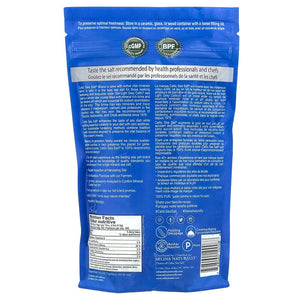
Use it as you would regular salt: in cooking, baking and pickling, and at the table. The coarse crystals work well in a grinder. It is best added to home-cooked meals rich in vegetables, protein and healthy fats, so the sodium arrives together with the potassium and magnesium from food. The label directs: to preserve optimal freshness, store in a ceramic, glass or wood container with a loose-fitting lid. Because it is not iodized, your thyroid needs iodine from other sources such as fish, seafood, seaweed and eggs.
Product Details
- Type: Light Grey Celtic, raw unrefined sea salt.
- Net weight: 454 g (1 lb).
- Sodium per 1/4 tsp (1.5 g): 480 mg (20% DV).
- Iron per 1/4 tsp (1.5 g): 2% DV.
- Calories, carbohydrate and protein: 0.
- Uses per bag: about 302 at 1/4 tsp each.
- Ingredients: Sea Salt. Contains zero additives.
- Iodine: Not iodized. This salt does not supply iodide.
- Certifications: Kosher Certified, Paleo, cGMP.
- Brand and origin: Celtic Sea Salt, Product of EU, distributed by Selina Naturally, USA.
Frequently Asked Questions
What is the difference between Celtic sea salt and regular table salt?
Table salt is refined down to nearly pure sodium chloride, usually contains anti-caking agents and is often iodized. Celtic sea salt is raw and unrefined. It keeps its moisture and traces of ocean minerals and has no additives, but it is not iodized.
Why do I feel tired and get headaches when starting a low-carb diet?
When sugar and starch drop, insulin falls and the kidneys release the sodium and water they had been holding. This rapid loss of electrolytes is a common cause of fatigue, headaches, dizziness and cramps in the early stage. That is why paying attention to salt and potassium-rich vegetables is a key part of low-carb eating.
Does this salt contain iodine?
No. The label states clearly that this salt does not supply iodide. Iodine is essential for making thyroid hormones, so if this is your only salt, get iodine from fish, seafood, seaweed and eggs.
Are the other minerals enough to cover magnesium and potassium?
No. They are present in small amounts that the label does not specify. The value of this salt is that it is clean, natural and additive-free. Real sources of magnesium and potassium are leafy greens, nuts and avocado, or dedicated supplements.
Caution
Consult your doctor if you have high blood pressure, heart or kidney disease, or follow a sodium-restricted diet.
Are your products genuine?
Yes. Everything is imported from the United States, the United Kingdom and Turkey, and the Best Before date is printed on each product page.
How long does delivery take?
One to two working days, to every governorate in Jordan.
What does delivery cost?
Free on orders of 29 JOD or more; orders under 29 JOD have a delivery fee of only 2 JOD.
How can I pay?
Cash on delivery, Visa or Mastercard at the door, or CliQ. PayPal is available on request — message us and we will send you a payment link.
Can I return a product?
Yes. Our policy is deliberately flexible: if the product is not right for you, for any reason, you get a full refund including the delivery fee. Details in our Refund Policy.
How do I reach you?
WhatsApp +962 7 8162 0564, email qtrat.al97ah@qtrat.net, or through Facebook and Instagram.